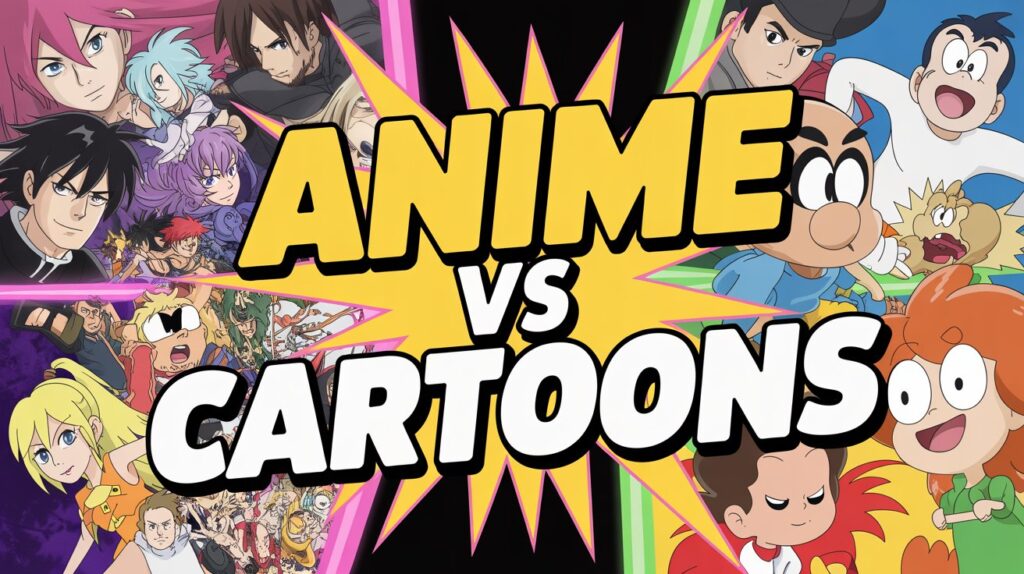

For decades, anime and cartoons have been casually grouped under the same umbrella. Many people still say, “Anime is just a type of cartoon.” This assumption sounds harmless, but it misses the depth, culture, storytelling philosophy, and creative intent that clearly separate anime from Western cartoons. Anime vs Cartoons.
In countries like India, this confusion is even more common. Shows like Dragon Ball Z, Naruto, and One Piece were broadcast alongside Tom and Jerry and Scooby-Doo, leading many viewers to assume they were fundamentally the same. However, once you look closely at their origins, narrative depth, visual language, and target audience, the differences become undeniable.
This article takes a deep, editorial look at why anime and cartoons are not the same. Not stylistically, not culturally, and certainly not philosophically.
Table of Contents
Understanding the Core Definitions
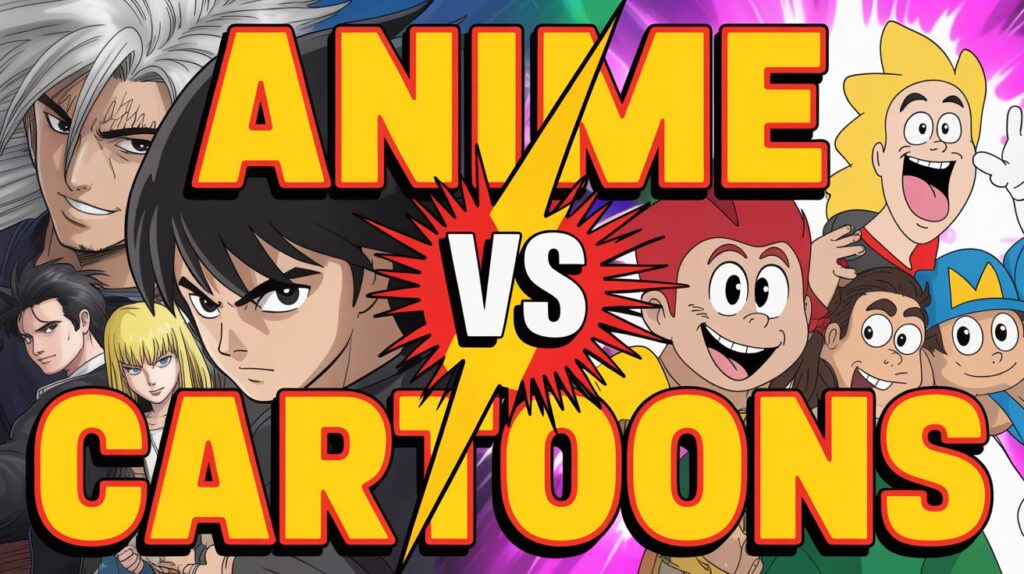
Before comparing, it is essential to understand what each term truly means.
What Is Anime?
Anime refers to animated works that originate from Japan or follow Japanese animation traditions. The word “anime” itself comes from the English word “animation,” but in Japan, it refers to all animation. Outside Japan, anime specifically means Japanese-style animation.
Anime is not a genre. It is a medium. Within anime, you will find romance, horror, psychological thrillers, political dramas, slice-of-life stories, and philosophical science fiction. Anime treats animation as a serious storytelling form, not a children-only format.
What Are Cartoons?
Cartoons, especially in the Western context, are animated works traditionally designed for children or family audiences. Historically, cartoons focused on humor, exaggerated movements, slapstick comedy, and episodic storytelling.
While modern Western animation has evolved, cartoons are still largely associated with light entertainment rather than layered narrative depth.
Origins and Cultural Roots
Anime’s Japanese Roots
Anime is deeply rooted in Japanese culture, history, and societal values. Its evolution is tied closely to manga, Japan’s comic culture, which caters to all age groups. Manga covers topics like war trauma, workplace stress, loneliness, existential fear, and even economic collapse.
Post-World War II Japan played a crucial role in shaping anime’s tone. Themes of loss, rebuilding, identity, and morality frequently appear. This is why anime often feels introspective and emotionally intense.
Cartoons and Western Entertainment Culture
Western cartoons grew alongside newspaper comic strips and theatrical shorts. Their primary goal was entertainment and humor. Early cartoons were designed for short attention spans, theatrical laughs, and easy mass appeal.
While cultural commentary exists, it is usually subtle or comedic rather than emotionally immersive.
Storytelling Depth and Narrative Structure
Anime Treats Animation as Cinema
Anime storytelling often mirrors live-action films and novels. Long character arcs, multi-season narratives, and emotional continuity are common.
For example, Attack on Titan explores freedom, war ethics, genocide, and moral ambiguity. Death Note examines justice, power, and human corruption. These stories demand attention, patience, and emotional investment.
Anime rarely resets characters to zero after each episode. Choices have consequences, deaths matter, and emotional scars persist.
Cartoons Focus on Episodic Comfort
Traditional cartoons follow episodic formats. You can watch episodes in any order without missing context. Characters rarely age, change, or face permanent consequences.
This approach is intentional. Cartoons aim to provide comfort, humor, and familiarity. While modern Western animation has introduced continuity, the foundation remains episodic.
Character Development and Emotional Complexity
Anime Characters Feel Human
Anime characters cry, fail, doubt themselves, and grow slowly. They experience trauma, depression, jealousy, love, and regret. Their internal conflicts often drive the story more than external action.
In Your Lie in April, grief and emotional paralysis are central themes. In Tokyo Ghoul, identity crisis and moral conflict shape the protagonist’s journey.
These stories resonate deeply with teenagers and adults because they reflect real psychological struggles.
Cartoon Characters Are Symbols
Cartoon characters are often exaggerated representations rather than realistic individuals. Their personalities remain consistent for humor and brand recognition.
This does not make cartoons inferior. It simply means they serve a different creative purpose.
Art Style and Visual Language
Anime’s Cinematic Visuals
Anime uses detailed backgrounds, dramatic lighting, symbolic imagery, and expressive facial animation. Silence, still frames, and subtle movements are used to convey emotion.
Visual symbolism is common. Falling petals represent fleeting moments. Rain often symbolizes emotional release. Empty classrooms evoke loneliness.
Cartoon Visual Simplicity
Cartoons favor bold outlines, bright colors, and exaggerated motion. Visual clarity is prioritized over realism. This makes cartoons instantly recognizable and accessible to younger audiences.
The goal is visual humor and immediate engagement, not emotional subtlety.
Target Audience and Age Perception
| Aspect | Anime | Cartoons |
|---|---|---|
| Primary Audience | Teens and adults | Children and families |
| Emotional Complexity | High | Low to moderate |
| Mature Themes | Common | Rare |
| Story Continuity | Strong | Weak to moderate |
One of the biggest misconceptions is that animation equals children’s content. Anime breaks this stereotype completely. Many anime titles are explicitly not meant for kids.
Cartoons, on the other hand, are generally created with children in mind, even when adults enjoy them nostalgically.
Themes and Subject Matter
Anime Explores Real-Life Issues
Anime frequently tackles themes like:
- Mental health and depression
- War and political power
- Social isolation
- Economic struggle
- Moral ambiguity
- Death and existential fear
These topics are explored seriously, without comedic filters.
Cartoons Prioritize Humor and Morals
Cartoons often focus on:
- Friendship and teamwork
- Simple moral lessons
- Comedy and adventure
- Imagination and creativity
Even when serious messages exist, they are simplified for younger minds.
Production Philosophy and Creative Freedom
Anime Is Creator-Driven
Many anime are adaptations of manga written by a single author. This allows strong creative vision and thematic consistency.
Studios respect the original creator’s intent, even if the story becomes dark or controversial.
Cartoons Are Market-Driven
Western cartoons are often designed around toy sales, merchandising, and broadcast standards. Creative risks are limited to ensure mass appeal.
This difference alone explains why anime feels more personal and emotionally raw.
Music, Silence, and Emotional Impact
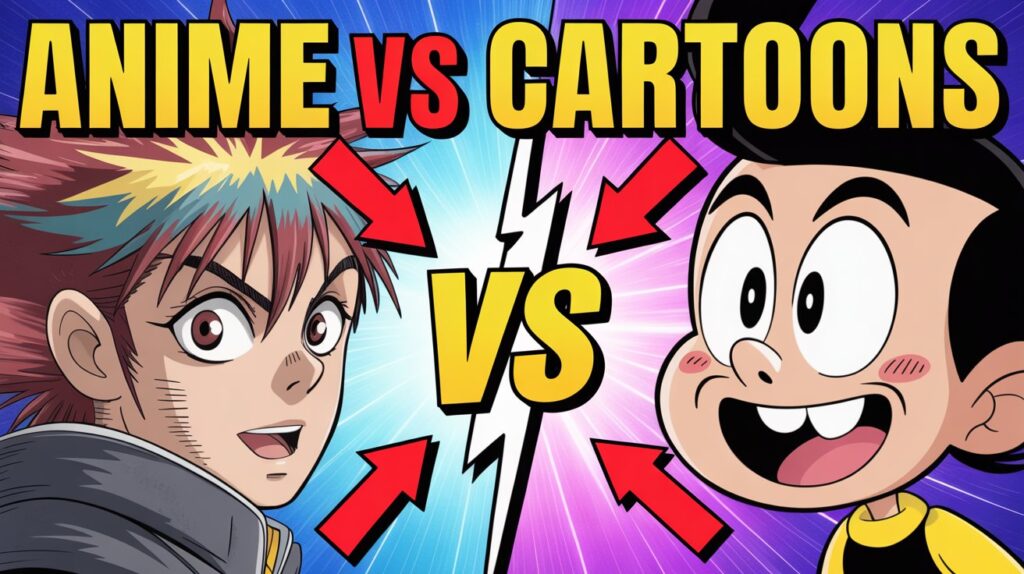
Anime soundtracks are carefully composed to enhance mood. Openings and endings are part of the storytelling experience. Silence is often used as a powerful emotional tool.
Cartoons rely more on background music for energy and comedic timing rather than emotional immersion.
Global Influence and Fandom Culture
Anime fandom is deeply analytical. Fans discuss symbolism, theories, character psychology, and philosophical themes. Anime conventions, cosplay culture, and fan art communities reflect this emotional investment.
Cartoon fandom is generally lighter, centered around nostalgia, humor, and entertainment.
Why the Confusion Still Exists
The confusion exists because both anime and cartoons are animated. That is where the similarity ends.
Animation is a medium, not a genre. Just as films can be documentaries or thrillers, animation can be light comedy or deep psychological drama.
Calling anime a cartoon is like calling a novel a children’s picture book.
Final Verdict: Not Better, Just Different
Anime is not superior to cartoons, and cartoons are not inferior to anime. They are fundamentally different creative forms serving different audiences, purposes, and emotional needs.
Anime treats animation as a serious storytelling medium. Cartoons treat animation as entertainment-first content. Both are valid, but they are not the same.
Understanding this distinction allows viewers to appreciate both art forms without undermining either.
Also Read: “Eren Yeager: Hero or Villain? Moral Philosophy Explained“
FAQs
Is anime just a type of cartoon?
No. Anime is a distinct animation medium rooted in Japanese culture, storytelling philosophy, and artistic tradition.
Why do anime stories feel more emotional than cartoons?
Anime focuses on long-term character development, psychological depth, and mature themes, while cartoons prioritize humor and episodic storytelling.
Can adults watch cartoons and kids watch anime?
Yes, but many anime are not suitable for children due to mature themes, while most cartoons are designed for younger audiences.