
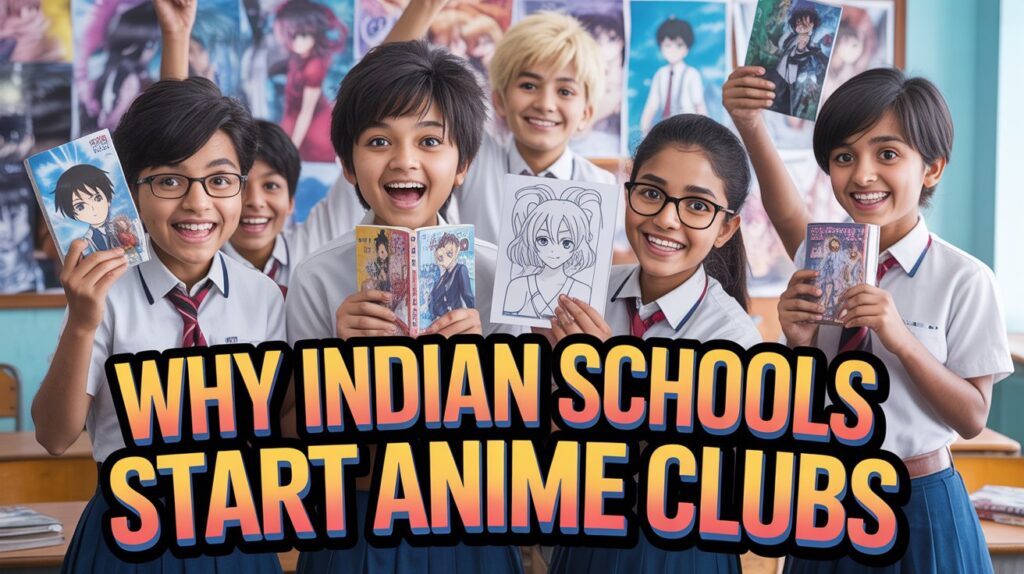

In recent years, anime has quietly transformed from a niche interest into a mainstream cultural force among Indian students. What was once limited to late-night television slots and internet forums is now part of everyday conversations in school corridors. Students discuss characters, themes, animation styles, and story arcs with the same enthusiasm once reserved for cricket or cinema. Why Indian Schools Should Start Anime Clubs.
Yet, despite this widespread interest, anime remains largely absent from formal school activities. Most institutions still view it as mere entertainment, detached from learning or personal development. This perception is outdated. When approached thoughtfully, anime can become a powerful educational and social tool.
This is why Indian schools should seriously consider starting anime clubs, not as casual fan groups, but as structured, supervised spaces that encourage creativity, discussion, emotional intelligence, and global awareness. Far from being a distraction, anime clubs can complement academic learning and support holistic student development.
Table of Contents
Anime’s Growing Cultural Presence in India
Anime’s rise in India is not accidental. Streaming platforms, social media, and global pop culture exposure have made Japanese animation easily accessible to students across urban and semi-urban regions. Series such as Naruto, One Piece, and Attack on Titan are now part of common youth vocabulary.
This growth reflects a broader shift in how students consume stories. Anime offers long-form narratives, emotional depth, and moral complexity that many young viewers find missing in short-form content. Ignoring this shift creates a gap between school culture and student interests.
Anime clubs help bridge that gap.

Anime Is Not Just Entertainment, It Is Storytelling
One of the biggest misconceptions surrounding anime is that it is only about action, fantasy, or exaggerated visuals. In reality, anime spans genres including history, psychology, philosophy, science fiction, and social commentary.
Many anime series explore:
- Ethics and moral dilemmas
- Friendship and teamwork
- Mental health and self-identity
- War, peace, and social responsibility
- Discipline, perseverance, and goal-setting
These themes align closely with values schools aim to instill, but often struggle to teach through textbooks alone.
An anime club provides a space where students can explore these ideas organically, through stories they already care about.
Encouraging Critical Thinking Through Discussion
Anime clubs are not about passive watching. When structured properly, they become discussion-driven environments.
After watching selected episodes or scenes, students can engage in guided conversations such as:
- Was the character’s decision justified?
- What alternatives existed?
- How did fear, loyalty, or ambition influence actions?
- What real-world parallels can we draw?
These discussions strengthen critical thinking, reasoning, and articulation skills.
Instead of memorizing answers, students learn how to analyze narratives, defend viewpoints, and respect differing opinions. These are essential life skills rarely developed through rote learning.
Supporting Emotional Intelligence and Mental Health
Adolescence is an emotionally complex phase. Students struggle with identity, pressure, failure, and expectations. Anime often addresses these issues directly and empathetically.
Characters experience loss, self-doubt, anxiety, and moral conflict. They fail, recover, and grow over time. For many students, this representation is validating.
Anime clubs can create safe spaces where students:
- Express emotions through discussion
- Relate personal experiences to stories
- Learn empathy by understanding different perspectives
When moderated by teachers or counselors, these conversations can support emotional well-being without turning into therapy sessions.
Promoting Reading and Narrative Literacy
Many anime series are adaptations of manga, light novels, or historical references. Anime clubs naturally encourage students to explore source material.
This leads to:
- Increased reading habits
- Interest in storytelling structure
- Appreciation for character development
- Exposure to different cultural narratives
Students who might otherwise avoid traditional literature often find reading manga more approachable, eventually transitioning to novels and non-fiction.
Anime clubs do not replace reading. They act as gateways to it.
Enhancing Creativity and Artistic Skills
Anime inspires creativity across multiple disciplines.
Students interested in:
- Drawing and illustration
- Animation basics
- Writing fan fiction or original stories
- Music and voice acting
find anime clubs to be motivating environments.
Schools can integrate activities such as:
- Character design workshops
- Storyboard creation
- Short script writing
- Art exhibitions inspired by anime themes
These activities nurture creative confidence, which is often overlooked in exam-focused systems.
Building Teamwork and Leadership Skills
Running an anime club requires organization. Students take on roles such as:
- Club coordinators
- Discussion leaders
- Event planners
- Content curators
This structure encourages responsibility, leadership, and teamwork.
Students learn to:
- Plan sessions
- Manage time
- Collaborate respectfully
- Communicate ideas clearly
These soft skills are critical for future academic and professional success.
Anime Clubs Encourage Healthy Media Consumption
Unsupervised media consumption can be problematic. Anime clubs offer a guided alternative.
Schools can:
- Select age-appropriate content
- Encourage balanced viewing
- Discuss themes critically rather than glorifying violence
- Promote moderation and context
This approach teaches students how to consume media responsibly, a vital skill in the digital age.
Breaking the Stigma Around Anime
In many Indian households, anime is still misunderstood. It is often dismissed as childish or unproductive.
When schools formally recognize anime clubs, it sends a powerful message. Anime is a legitimate form of storytelling worthy of discussion.
This institutional validation helps:
- Reduce stigma
- Encourage parental acceptance
- Normalize diverse interests
Education evolves when institutions acknowledge changing cultural landscapes.
Cultural Awareness and Global Perspective
Anime introduces students to Japanese culture, values, and storytelling traditions. It opens conversations about:
- Cultural differences
- Historical context
- Global storytelling styles
In an increasingly interconnected world, cultural literacy is as important as academic knowledge.
Anime clubs expose students to global perspectives without leaving the classroom.
Addressing Concerns About Distraction
Critics often argue that anime distracts students from studies. This concern is understandable, but incomplete.
The issue is not anime itself, but unstructured consumption.
Anime clubs:
- Limit viewing time
- Emphasize discussion and learning
- Encourage balance
- Channel interest productively
When managed properly, anime clubs enhance engagement rather than reduce focus.
How Anime Clubs Can Be Structured in Indian Schools
Anime clubs do not require large budgets or complex infrastructure.
A simple structure may include:
- Weekly or bi-weekly meetings
- Teacher supervision
- Curated content lists
- Discussion guidelines
- Creative activities
Schools can start small and evolve based on student interest.
Educational Benefits of Anime Clubs at a Glance
| Area of Development | How Anime Clubs Help |
|---|---|
| Critical thinking | Story analysis and debates |
| Emotional intelligence | Empathy and self-expression |
| Creativity | Art, writing, and design |
| Communication | Group discussions |
| Leadership | Club management roles |
| Cultural awareness | Global perspectives |
| Media literacy | Responsible consumption |
Aligning With Modern Education Goals
India’s education system increasingly emphasizes holistic development, creativity, and critical thinking. Anime clubs align naturally with these goals.
They:
- Encourage curiosity
- Support student-led learning
- Blend entertainment with education
- Foster inclusive communities
Ignoring such opportunities limits educational innovation.
Why Schools Must Act Now
Students are already watching anime. Schools have a choice. Either ignore this reality or harness it.
By starting anime clubs, schools can:
- Guide student interests
- Enhance engagement
- Support mental well-being
- Modernize extracurricular offerings
Anime clubs represent not a departure from education, but an evolution of it.
Final Thoughts
Anime clubs are not about promoting fandom culture blindly. They are about recognizing the educational potential of modern storytelling.
Indian schools stand at a crossroads. As student interests evolve, educational spaces must evolve too. Anime clubs offer a simple yet powerful way to connect learning with passion.
By embracing anime thoughtfully, schools can transform a popular interest into a platform for growth, creativity, and meaningful conversation.
That is why Indian schools should start anime clubs, not tomorrow, but now.
Also Read: “What Attack on Titan Teaches Us About War and Humanity“
Frequently Asked Questions
Are anime clubs suitable for Indian school students?
Yes, anime clubs can be highly suitable for Indian school students when guided by teachers. They promote critical thinking, creativity, teamwork, and emotional awareness, while encouraging responsible and age-appropriate media consumption.
How can anime clubs benefit students academically and socially?
Anime clubs help students improve communication skills, analytical thinking, and cultural awareness. Group discussions and creative activities also support confidence, leadership, and peer bonding, which positively impact both academic and social development.
Will anime clubs distract students from their studies?
When properly structured, anime clubs do not distract students from studies. Instead, they provide a balanced extracurricular activity that channels student interest productively, supporting focus, discipline, and healthy engagement with media.